Winter Is Coming: Preparing Your Pet for the Cold Months
You notice it before your dog does. That first properly cold morning where they get up from their bed a bit slower than usual, stretch twice instead of once, and give you a look that clearly says do we really have to go outside?
By the time winter settles in, the changes pile up. The coat thickens. The walks get shorter because the sun disappears before you’ve thought about the afternoon walk. And if your pet is older or carries extra weight, cold weather can turn manageable stiffness into something that affects their whole day.
Winter pet care goes well beyond buying a jacket and hoping for the best. The cold changes how your pet’s body functions, from their joints to their coat to their skin, and understanding what’s actually going on makes it much easier to keep them comfortable.
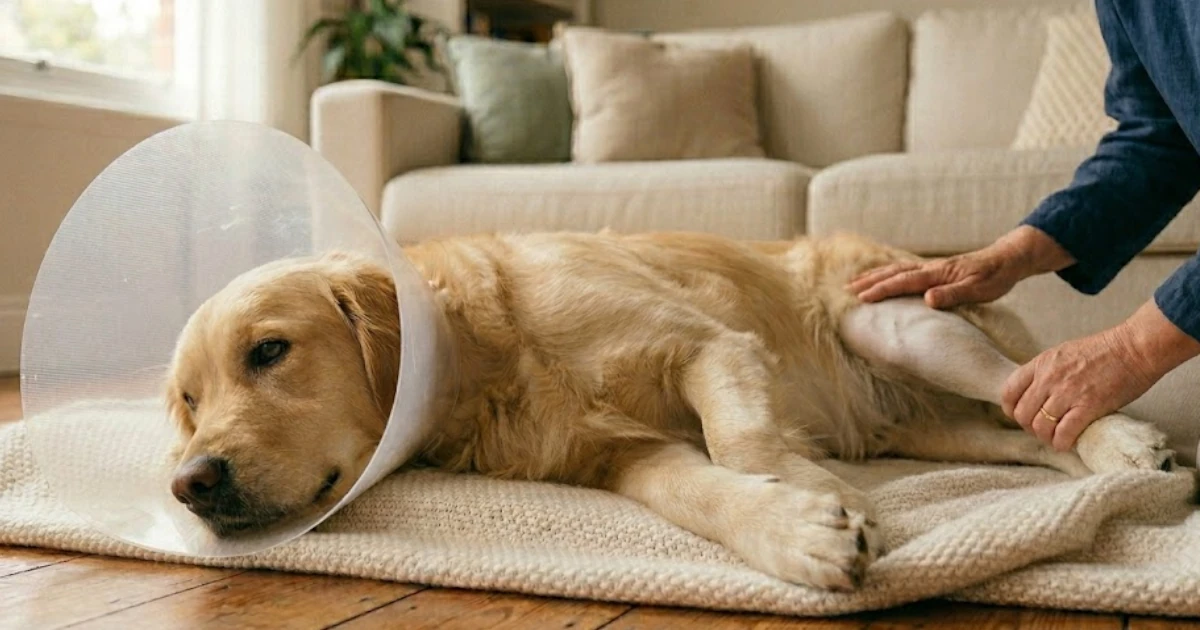
That morning stiffness isn’t just “getting old”
Arthritis is one of the most common conditions veterinarians diagnose in older dogs, estimated to affect roughly one in five across all breeds. The numbers climb sharply for large breeds and dogs past eight. Cats get it too, though they’re much better at hiding it.
Winter makes the whole thing worse. Cold temperatures thicken the synovial fluid that lubricates joints, so movement becomes stiffer and less comfortable. When barometric pressure drops (which happens frequently with winter weather systems), joint tissues swell slightly. Combine that with the fact that most pets move less when it’s cold, and you’ve got muscles tightening, joints aching, and mornings that hurt.
The signs can be subtle. Your dog might hesitate before jumping on the couch, or lag behind on walks when they’d normally be pulling ahead. Cats often stop jumping to their favourite high spots, or start licking at their hips and knees more than usual. RSPCA Queensland flags stiffness, difficulty on stairs, and chewing at joints as signs worth a vet visit.
What actually helps is consistent, gentle movement. Short daily walks on flat ground do more good than one big weekend hike that leaves them sore for days. RSPCA NSW veterinary manager Dr Caroline Edgehill recommends keeping senior dog walks to around 20 minutes over even terrain. On truly awful days, indoor games work just as well: hide-and-seek with treats, gentle tug, or puzzle feeders that get them moving without stressing their joints.
A few home adjustments help too. If your dog normally jumps on and off the bed or couch, a pet ramp reduces the impact on sore joints. And keeping their weight in check matters more than ever, because every extra kilo puts additional load on joints that are already working harder in the cold.
If your pet already has an arthritis diagnosis, talk to your vet before winter arrives. Anti-inflammatory medication, omega-3 supplements, and joint injections like Cartrophen can make an enormous difference when you start early, rather than waiting until they’re already struggling to stand up.
Your dog’s coat is working harder than you think
Something most owners don’t know: your dog’s coat doesn’t thicken because of the cold. It thickens because of the dark.
The trigger is photoperiod, the number of daylight hours in a day. As days shorten in autumn, your dog’s body reads the change and signals the coat to bulk up. Research from Embark Veterinary found that dogs living primarily outdoors experience sharper seasonal coat transitions, while indoor dogs exposed to artificial lighting all evening tend to shed at a lower intensity year-round. In their survey, 47% of owners reported their dogs shed constantly regardless of season. Artificial light is the likely reason.
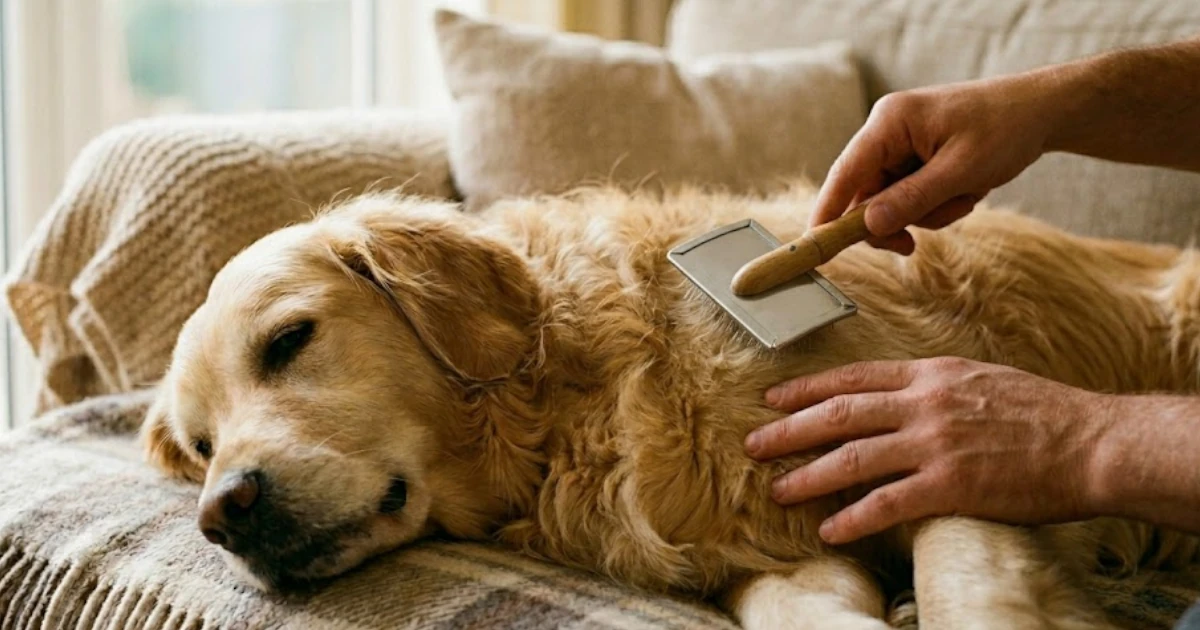
For double-coated breeds like Golden Retrievers, Huskies, Border Collies, and Australian Shepherds, winter means the undercoat hits its thickest point. This is when grooming matters more, not less. Australian veterinarian Dr Lisa recommends daily brushing for double-coated dogs through winter, because dead undercoat traps moisture and debris against the skin. Left alone, that leads to matting, irritation, and sometimes infection.
A slicker brush and an undercoat rake are the two tools worth owning. Fifteen minutes a day prevents hours of detangling later. And whatever you do, don’t shave a double-coated dog. That undercoat insulates against both cold and heat. Shave it off and it may grow back patchy or not properly at all.
For single-coated and short-haired breeds (Greyhounds, Whippets, Staffies), the equation flips. These dogs don’t have a thick undercoat to rely on, and they genuinely feel the cold. A well-fitted jacket covering from the neck to the base of the tail, with belly coverage, makes a real difference on winter walks. RSPCA Queensland recommends removing the jacket once you’re back inside, though. They can overheat under all those layers in a heated house.
Long-haired cats like Persians and Ragdolls also develop thicker coats through winter and need regular brushing to prevent matting. Short-haired cats generally manage their own grooming, but keep an eye out for dry, flaky skin as a sign the indoor heating is stripping moisture from their coat.
Winter air dries out skin across the board. Veterinarian Dr Brittany Kleszynski recommends spacing baths further apart in winter (every four to six weeks) and using a moisturising or oatmeal-based shampoo. If your dog’s skin looks flaky or their coat feels brittle, that’s the dry air, not a grooming failure.
When the sun clocks off at 5pm
This one sneaks up on people. In Melbourne, winter daylight drops to under ten hours. In Hobart, closer to nine. If you work a standard day, both your morning and evening walk windows might now be in the dark.
The obvious concern is safety. You and your dog need to be visible to drivers, cyclists, and other pedestrians. Reflective collars, harnesses, and clip-on LED lights work by bouncing light back toward its source, so when headlights hit your dog’s vest, drivers see a bright silhouette instead of a dark shape on the footpath. These cost almost nothing and they’re genuinely worth it.
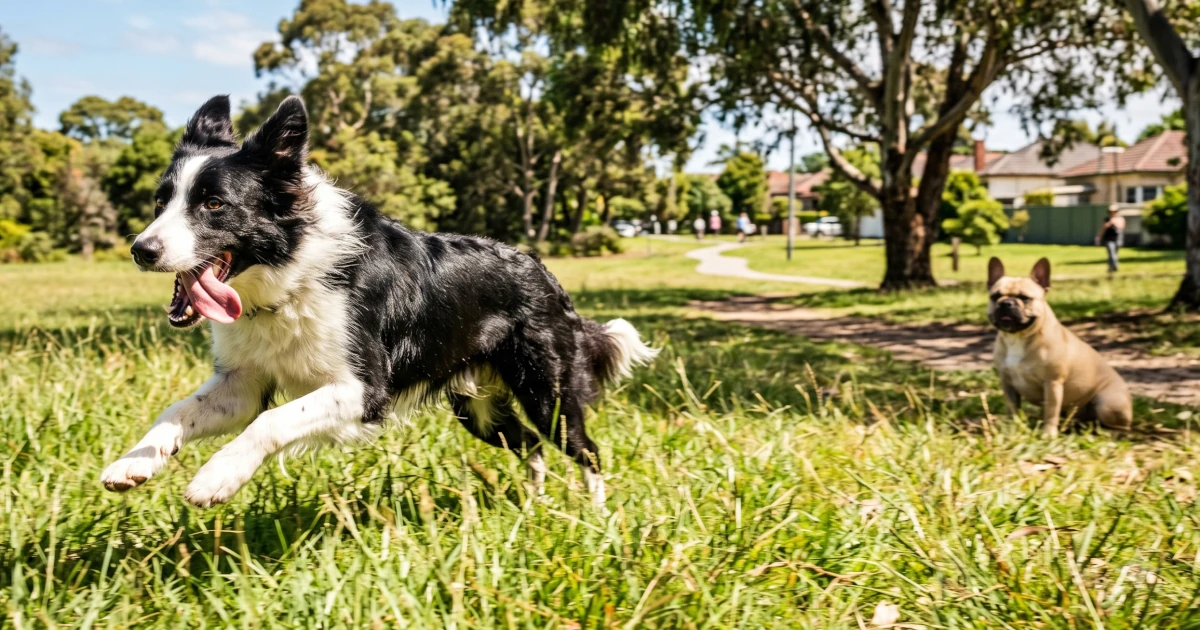
But the less obvious problem is what shrinking daylight does to your pet’s enrichment. A dog who used to get a long afternoon walk with off-lead time at the park might now be getting a quick loop of the block in the dark. Less sniffing, less exploring, less mental stimulation. Bored dogs find their own entertainment, and it’s rarely the kind you’d choose for them: chewing, barking, digging, or that special restless pacing that drives everyone in the house mad.
If possible, shift your main walk to lunchtime on weekends, or use your lunch break during the week. Even fifteen minutes in daylight is better for both of you than thirty in the dark. Your dog gets more visual stimulation, you both get some vitamin D, and the whole thing is safer.
When you can’t extend outdoor time, compensate indoors. Scatter feeding (tossing kibble across the floor instead of putting it in a bowl) turns dinner into a ten-minute sniffing exercise. Frozen Kongs, lick mats, and puzzle feeders all do the job. Even five minutes of training burns more mental energy than most people expect. The goal isn’t to replace walks, just to make sure your dog’s brain still has something to work on when the hours of light shrink.
For cat owners, shorter days usually mean less time watching birds through the window and more time sleeping (already a cat’s primary occupation). But if your indoor cat seems restless or starts expressing strong opinions about your benchtop ornaments, a puzzle feeder or wand toy session before dinner can help burn off the excess energy.
Your winter pet care checklist
A few things that are easy to overlook when the temperature drops.
Bedding. Raise your pet’s bed off the floor, especially on tiles or concrete. Cold radiates up from hard surfaces and makes overnight joint stiffness worse. Add an extra blanket and position the bed away from draughts. For arthritic pets, an orthopaedic memory foam bed is worth the money.
Heating safety. Dogs and cats will park themselves as close to a heater as you’ll let them, and sometimes closer. They can dry out their skin or burn themselves if they doze off near a heat source. Heated pet pads are a much safer option.
Paw care. Cold, wet ground and frost can crack paw pads over time. Wipe paws down after walks and check between the toes for debris or irritation. A dog-specific paw balm protects against cracking the same way hand cream protects yours.
Water. Pets still need fresh water in winter. Just because they’re not panting doesn’t mean they’re hydrated. Check outdoor bowls for ice on cold mornings.
A pre-winter vet check. Dr Edgehill from RSPCA NSW recommends organising a seasonal health check before the cold properly sets in. It’s the best way to catch early arthritis, dental issues, or weight changes before winter makes them harder to manage.
Outdoor pets. If your dog or cat spends significant time outside, they need shelter that’s dry, elevated, and protected from wind and rain. Line it with blankets and wash them regularly. On genuinely cold nights, bring them inside.
What it comes down to
Winter doesn’t have to mean three months of your pet being uncomfortable. Most of the adjustments are small: an extra blanket, a jacket for cold walks, more regular brushing, some indoor enrichment to fill the gap when daylight runs short. Pay attention to how your pet moves, settles, and behaves through the colder months, because those small changes often tell you what the cold is doing before anything becomes a real problem.
Heading away this winter and want your pet looked after by someone who understands what cold weather does to them? Lapdog’s vet nurse sitters know what to watch for, from stiff joints on cold mornings to coat care between walks, and they’ll adjust their routine to keep your pet comfortable while you’re gone.